Core 2 Duo processors: shock and tremor

Date: 14.07.2006
|
|
Author: , ,
Introduction
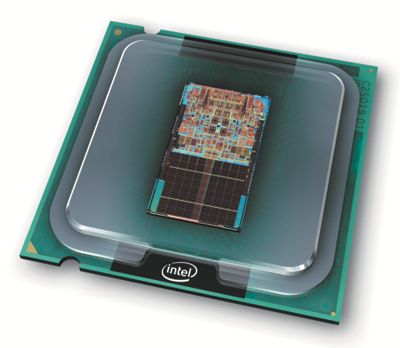
This day can be set as the official date marking the start of a new epoch of Intel Core 2 Extreme and Intel Core 2 Duo family processors built on the base of the Conroe core. Indeed, it is just on this day onwards Intel's new architecture of which all have been talking for at least the past half a year will be acquiring the official status of a retail product and starts taking its legitimate place in our desktop systems.
In fact, we can't talk solely about the processor debut of the Conroe core, because by tradition Intel has presented a comprehensive solution – new processors combined with the new family of Intel 965 chipsets which will be the basis for various platform solutions like gaming PCs, entertainment systems, office computers, etc.
Nevertheless, our today's material is devoted solely to the practical aspect of research into the real capabilities of the new-generation processors – to start with, those in combination with the flagship "desktop" Intel 975X chipset. In fact, with this review we are opening a course of research works devoted to the capabilities of Core 2 Duo processors in various environments - in combination with various motherboards based on various chipsets, video cards, and other components.
As the very first tests of new processors have shown, there is indeed much to investigate. Even the heading of today's article chosen not for the sake of a witticism: at long last, the manufacturer of processors has gladdened us with not the traditional 10-20% but a two-fold performance boost combined with a real reduction in the chip temperature.
We hope the readers will forgive us the so emotional introduction especially when they see the results of tests. Anyway, before we move on to the lab let me give you a more detailed account of the specifications of today's tests. At least, to understand then how such impressive results come out at the benchmarks.
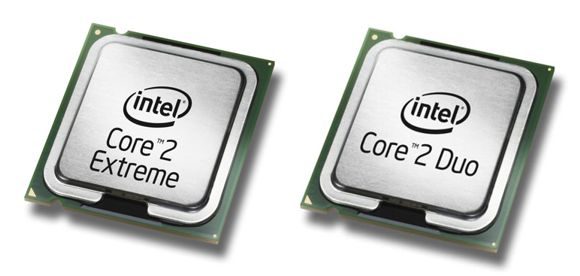 For the first time, the details of the Core 2 Duo architecture was announced at IDF Spring 2006. It's just when we came to know the new improvements of the Core architecture. In fact, the names of the new processor brands by Intel for desktop PCs - Core 2 Duo and Core 2 Extreme - became known some time later, in May 2006. Once exhaustive information on chips with the working name Conroe has appeared, it makes sense to publish a consolidated theoretical material on the new generation of the Core micro architecture. Those who for some reasons have missed the article Evolution of the multi-core Intel Core processor architecture: Conroe, Kentsfield.., or already forgot its main theses, should refresh the information, which will help us easier to comprehend the test results.
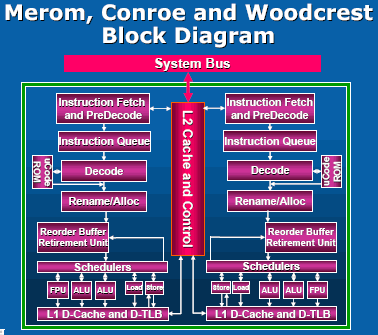 Today, we'd better mention the key specifications of Core 2 Duo and Core 2 Extreme inherited from Intel Pentium M and enriched with the best developments of the NetBurst architecture and a number of brand-new technologies:
- The Intel Wide Dynamic Execution - a technology that allows executing greater number of instructions executed per cycle, thus improving the efficiency of running applications and reducing the power consumption. Each core of the processor is now able executing up to four instructions simultaneously using the 14-stage pipeline
- The Intel Intelligent Power Capability - a technology that enables specific components of the chip only when needed, which gives a substantial reduction in the power consumption on the whole.
- The Intel Advanced Smart Cache - a technology of using the common L2 cache memory by all the cores, which gives an overall reduction in the power consumption, and at the same time one of the processor cores may use up the whole cache memory once the other core is disabled dynamically
- The Intel Smart Memory Access - a technology for the memory subsystem optimization that reduces the response time and increases the bandwidth of the memory subsystem
- The Intel Advanced Digital Media Boost - a technology that allows processing 128-bit SSE, SSE2, and SSE3 commands widely used in multimedia and graphic applications in one cycle
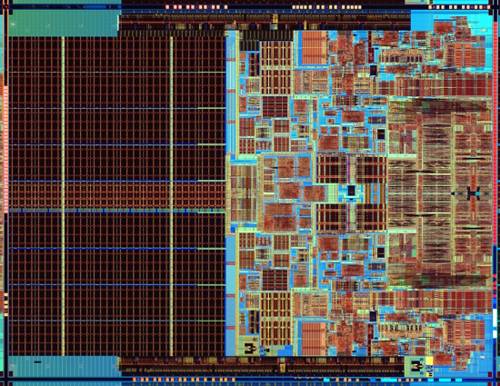 Additionally to these, the core uses the most recent 65-nm process technology introduced for the manufacture of new dual-core chips, which has given an additional saving in the power consumption and allows raising the boundary clock speed of the chips (of course, as compared to the "next of kin" which offer a similar micro architecture – Intel Core Duo family processors). The speeds of Core 2 Duo amount to 800 or 1066 MHz, the L1 cache for each core is 32 K for data and instructions, respectively; the capacity of the total distributed L2 cache is 2 MB or 4 MB.
Finally, what is left is to sort out with the specific questions. The pinout of the new processors is clear - it is the well-know LGA775. On the other hand, the marking of the processors has undergone essential changes. We can't say the combination of the letter prefix with a 4-digit index that follows it is so unexpected, especially that the mobile Core and Core Duo processors have been marked this way for at least half a year. Anyway, such designation is new for the desktop platforms.
This is what stands behind the new 5-character marking of Intel processors for desktop and mobile systems. The letter index at the beginning of the marking classified the TDP of the processor, without any relation to the form factor:
-
X - TDP over 75W
-
E - TDP of 50W and higher
-
T - TDP within 25W to 49W
-
L - TDP within 15W to 24W
-
U - TDP of about 14W and less
In its turn, the 4-digit index also has a meaning. In the general case, the higher the 4-digit number in the CPU marking is, the higher performance and power consumption it offers. At the same time, the first digit means the belonging of the chip to a certain product family, and the second one stands for the respective ranking within the family. Therefore, the greater the figure is, the higher is the performance of the chip.
Here are a few examples of how the marking of modern processors looks and what stands behind the notation:
- Core 2 Extreme X6800 – 2.93 GHz, 4 MB L2 cache, 1066 MHz FSB
- Core 2 Duo E6600 – 2.4 GHz, 4 MB L2 cache, 1066 MHz FSB
- Core 2 Duo E6400 – 2.13 GHz, 2 MB L2 cache, 1066 MHz FSB
- Core Duo T2500 – 2 GHz, 2 MB L2 cache, 667 MHz FSB
- Core Duo U2500 – 1.06 GHz, 2 MB L2 cache, 533 MHz FSB
Needless to say, such method of chip marking has no connection to the PR ratings of AMD processors which pretend for some relative correspondence to some MHz of a reference CPU; all is much simpler: the greater the figure is, the higher is the performance of the chip. Perhaps, after the infamous finish of the discredited system of performance rating that takes only the clock speed into account, this is the only method of real-time "rough" estimation of overall properties of the chip, without going deep into the detailed specifications. As regards the new method of marking Intel chips that has come as a replacement to the formerly used 3-digit combination, we finally can breathe with relief: now the graphics and the processors by all the main players of the market offer a similar structure of names - now all depends on who will be the first to to move to 5-digit numbers. ;-)
This is about all with the introduction, and we now move on to describing the test setup and the tests.
Next
 |
Content: |
 |
|
|
Top Stories: |
|
 |
|
MoBo:
|
|
|
|
VGA Card:
|
|
|
|
CPU & Memory:
|
|
|