Evolution of the multi-core processor architecture Intel Core: Conroe, Kentsfield...

Author:
Date: 27.06.2006 |
|
Intel Wide Dynamic Execution
The Intel Wide Dynamic Execution technology implies a set of novelties – advanced data analysis, speculative, priority-oriented command execution etc.first implemented by Intel in the P6 architecture and used in Pentium Pro, Pentium II, and Pentium III. In the Intel NetBurst architecture, the Advanced Dynamic Execution module was used for these purposes, which provided load to the executive modules of the processor and offered an improved branch processing algorithm in order to reduce the number of wrong branch predictions.
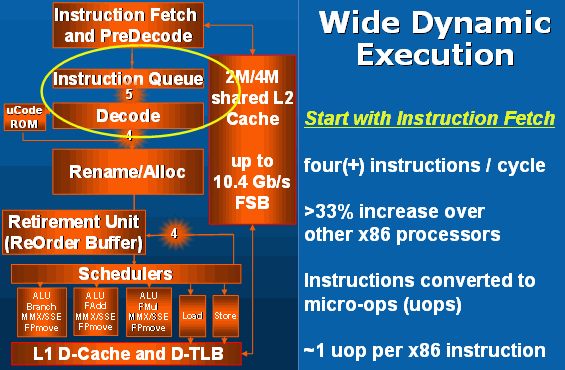
At the level of the Intel Core architecture, all this is consolidated into the advanced technology complex named the Intel Wide Dynamic Execution which allows providing greater number of commands executed per cycle, thus saving the time and energy.
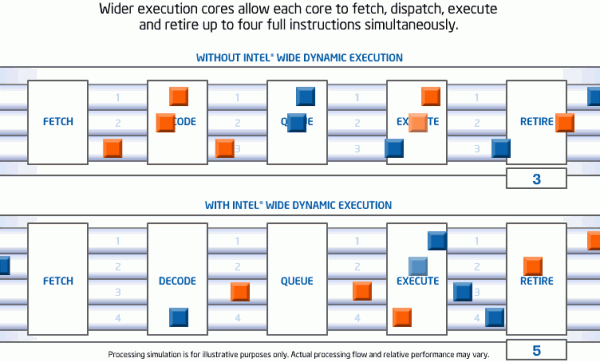
Now each processor core is able processing not three as it was in the Intel NetBurst architecture but four commands at a time, which gives a 33% boost as compared to the previous generations. Among the additional features implemented in the set of Intel Wide Dynamic Execution technologies, of note is the more precise branch prediction and deeper command buffering, which imparts additional flexibility to the execution process.
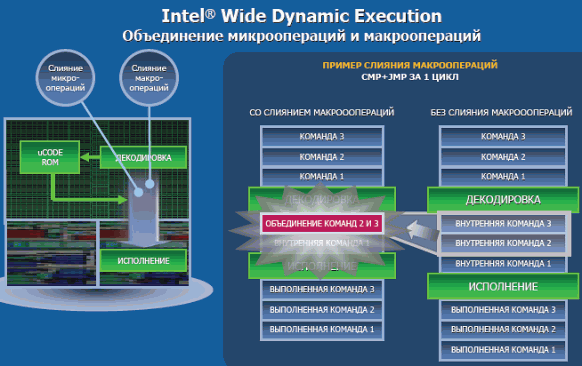
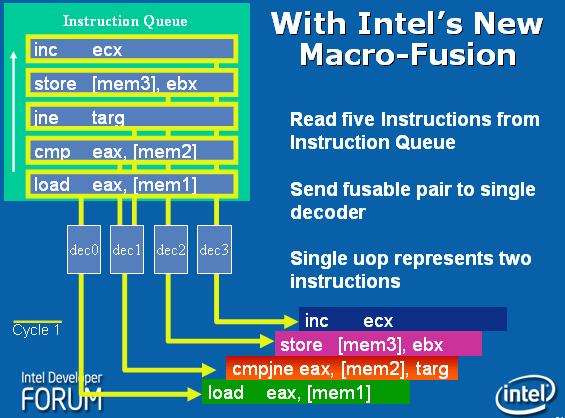
Along with these, Intel Wide Dynamic Execution implies an efficient use of the Macro-Fusion technology (Macro-OPs Fusion) that merges micro- and macro operations into unified executable macro operations. While in the previous generations of Intel processors each incoming instruction was decoded and executed separately, now the use of the macro-fusion principle during the command decoding allows merging pairs of some instructions into a unified internal micro-op.
Execution of two instructions as a unified micro-op allows reducing the total CPU usage and increasing the number of instructions processed per cycle. Moreover, the Arithmetic Logic Units used in Intel Core processors have been improved for better processing the commands merged into the macro-ops, which also results in the overall reduction of the chip's power consumption.
Therefore, according to Intel, it becomes possible to reduce load on operations by up to 15% and cut sown the number of micro operations by up to 10%, in the general case. As can be seen on the below diagram, the prefetch modules prepare a number of x86 commands, and up to five of them can be processed by four decoding units simultaneously. In the case of Macro-Fusion, it becomes possible to process five instructions per cycle at a time (no more than one macro command can be generated at a time).
Intel Intelligent Power Capability
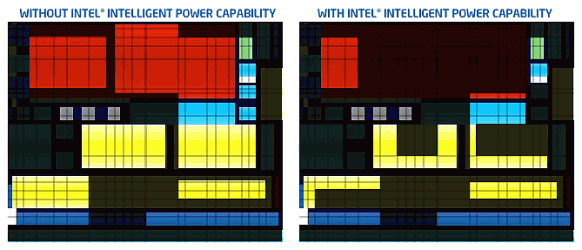
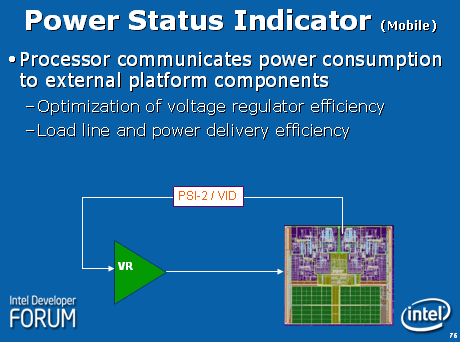
Another innovation under the consolidated name Intel Intelligent Power Capability appears to be a set of measures aimed at the reduction of power consumption of the chip and optimization of general design requirements. Technologies coordinating the power consumption by all the executable units of the processor include advanced features optimized for access time which keep track of the load at specific logical circuits.
It is important to note that load reduction in the Intel Core architecture is done not through disabling unused circuitry; on the contrary – the trace logic of the Intel Intelligent Power Capability enables the required logical subsystems once they are needed. Additionally, many inner buses and arrays of the CPU logical units are now distributed and powered through separate keys, which made it possible to switch them into the additional economical power-saving mode while processing certain types of data.
The major task of such "point-of-use" power scheme was to achieve a fast system response, e.g. when reverting the system back to the full capacity mode. As a result, such weighted approach in implementing the Intel Intelligent Power Capability has made it possible to further reduce the power consumption without detriment to the system response speed and increase the total power optimization of the Intel Core architecture.
Intel Advanced Smart Cache
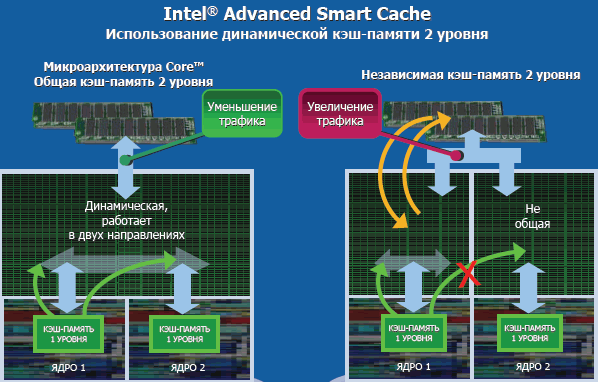
The new Intel Core architecture implements a rather efficient model of shared use of common L2 cache by the CPU cores. The Intel Advanced Smart Cache technology is optimized in a way allowing each core of the dual-core processor access data at the maximum efficiency.
Not all modern multicore processors are able distributing access to the shared L2 cache memory. In practice it means that each core has to operate with similar data placed in its own L2 cache. Moreover, the downtime of one of the cores in using the scheme of separate L2 caches simply means a downtime of the L2 cache memory in this core, which results in inefficient use of resources – whereas the second core may be running "breathless" without additional resources of the L2 cache.
In the case of the Intel Core architecture, both the cores access the common L2 cache and are able redistributing – up to 100%! - of L2 cache resources dynamically depending on the current load. This Multi-Core Optimized Cache technology allows for optimum use of the cache memory resource subsystem. Additional advantage of the Multi-Core Optimized Cache is in the much faster fetching of data out of the cache.
 |
Content: |
 |
|
|
Top Stories: |
|
 |
|
MoBo:
|
|
|
|
VGA Card:
|
|
|
|
CPU & Memory:
|
|
|